

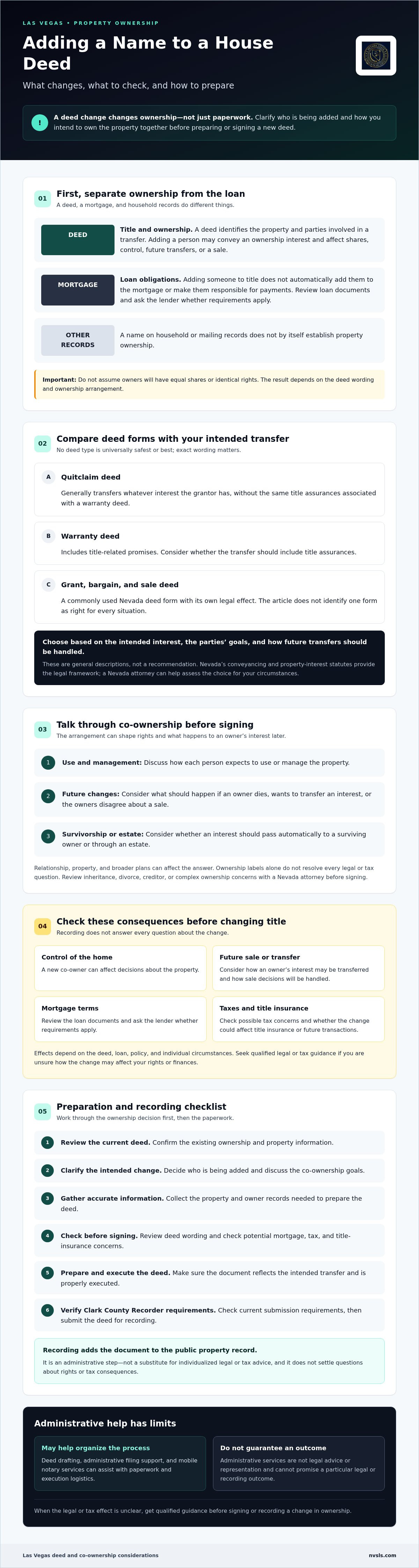
Adding someone to your home’s title changes ownership, not just paperwork. If you want to add name to house deed Las Vegas, first clarify who you’re adding and how you want to own the property together. Changing title can raise questions about the mortgage, taxes, control of the home, and what happens if an owner later wants to sell or transfer an interest.
A clear checklist can help you prepare. Review the current deed, decide what ownership change you intend, and gather accurate information about the property and everyone involved. You’ll also need to check current Clark County Recorder requirements. Recording the deed is an important step, but it doesn’t resolve every question about the consequences of changing ownership. Those depend on your circumstances, so seek qualified guidance when needed.
This guide covers deed and co-ownership choices, the information to gather, and the preparation and recording process in Clark County. It also outlines what to check before signing, including possible mortgage and tax concerns. Deed drafting and mobile notary services can help with the administrative process, but they can’t promise a particular legal or recording outcome.
Key Takeaways
- Before you add name to house deed Las Vegas, clarify the intended ownership change and how it differs from adding someone to the mortgage.
- Compare deed and co-ownership options with your goals, and verify their legal effects for your circumstances.
- Check how a new owner could affect control, future sale decisions, mortgage terms, and title insurance before changing recorded ownership.
- Gather property and owner records, prepare and execute the deed, then confirm current submission requirements with the Clark County Recorder.
- Deed drafting, administrative filing support, and mobile notary services can help organize the paperwork, but they aren’t legal advice or representation.
Adding a Name to a House Deed in Las Vegas: What Changes?
A deed is a document used to convey or document an interest in real property. It identifies the property and the parties involved in a transfer. This general Deed overview explains how deeds function in property transfers, but the effect of a particular document depends on its wording and the circumstances.
If you plan to add name to house deed Las Vegas, consider what the change means beyond the paperwork. You may be conveying an ownership interest to another person, which can affect your share and control of the property. The result depends on the deed language and ownership arrangement. Don’t assume that each person will own an equal share or have identical rights. Check what the document says and get guidance if the intended result is unclear.
What does adding a person to the deed actually do?
A deed may transfer an interest from an existing owner to a new co-owner. This can change who has an ownership interest and affect decisions about the home, future transfers, or a sale. The impact varies with the deed and the ownership arrangement. Before preparing a new deed, review the current one and make sure the parties have discussed their goals. Recording adds the document to the public property record, but it doesn’t settle questions about legal rights or tax consequences.
Deed, mortgage, and property records are different
The deed concerns title, or ownership of the property. A mortgage relates to the loan and the obligations in its loan documents. Adding someone to title doesn’t automatically add them to the mortgage or make them responsible for payments. Likewise, a person’s name on household or mailing records doesn’t by itself establish property ownership.
Before changing title, review the loan documents and ask the lender whether any requirements apply. Also check whether the change could affect title insurance or future transactions. The answer can depend on the loan, policy, and circumstances, so don’t rely on the deed alone to resolve these questions.
Recording a document is an administrative step, not a substitute for individualized legal or tax advice. If you’re unsure how the proposed change may affect your rights or finances, consult a qualified legal or tax professional. Getting answers before signing can help you avoid treating a significant ownership change as a routine records update.
Which Nevada Deed or Co-Ownership Arrangement Fits Your Situation?
No single deed form suits every title change. The right document depends on the interest being conveyed, the parties’ goals, and how they want ownership and future transfers handled. Nevada’s statutes on conveyancing and property interests provide the legal framework. Choosing an option for your circumstances may require advice from a Nevada attorney.
How do quitclaim and other deed forms differ?
Deed names signal important differences, particularly in the promises about title made by the person transferring an interest. Nevada commonly uses grant, bargain, and sale deeds, quitclaim deeds, and warranty deeds. In general, a quitclaim deed transfers whatever interest the grantor has without the same title assurances associated with a warranty deed. A warranty deed includes title-related promises, while a grant, bargain, and sale deed has its own legal effect. The exact wording matters, so treat these descriptions as general information, not a recommendation.
Before deciding how to add name to house deed Las Vegas, clarify what the transfer should accomplish and whether the deed should include title assurances. A form that seems simpler may not match the parties’ needs. No deed type is universally safest or best.
How should co-ownership intentions shape the deed?
Co-owners may hold title under different arrangements, and those choices can affect each person’s rights and what happens to an interest later. For example, consider whether an interest should pass automatically to a surviving owner or through an estate. The answer can depend on the parties’ relationship, the property, and their broader plans. Ownership labels alone don’t resolve every legal or tax question.
- Discuss how each person expects to use or manage the property.
- Consider what should happen if an owner dies, wants to transfer their interest, or the owners disagree about a sale.
- Review inheritance, divorce, creditor, or complex ownership concerns with a Nevada attorney before signing.
For more on preparation considerations, see this professional deed drafting guide for Las Vegas. If the ownership plan is already clear and you need help preparing the document, deed drafting support is an administrative option. Nevada State Forms & Filing Services prepares deeds but doesn’t provide legal advice or representation. A deed preparer can assist with paperwork; a Nevada attorney can advise which ownership arrangement fits your legal circumstances.
Risks to Check Before Adding Someone to Your Las Vegas Deed
A title change can affect the current owner’s interests as well as the person being added. Depending on the deed language and ownership arrangement, a new co-owner may gain a say in decisions about the property, including a future sale or transfer. Your ability to make those decisions alone could change. Think through how you would handle a disagreement, a change in circumstances, or a co-owner who wants to transfer their interest.
Before you add name to house deed Las Vegas, consider practical and financial questions alongside the paperwork. The consequences depend on the loan, property, and personal circumstances, so treat these as matters to verify rather than outcomes to assume.
Could adding a name affect your mortgage or taxes?
Review your loan documents and contact your lender to ask whether the proposed title change triggers any requirements under your loan. A deed change doesn’t automatically add the new owner to the mortgage or make them responsible for the loan. The lender can explain what applies to your specific agreement.
Tax treatment, potential transfer tax, and any exemptions depend on the details of the transfer. Confirm current requirements with an appropriate tax professional or government office before signing. Don’t assume the transfer is tax-free or that changing title will produce a particular tax result.
What if the change relates to marriage, divorce, or inheritance?
Family circumstances can make an ownership decision more complex. A change made during marriage, separation, or divorce may interact with other property arrangements. If divorce is relevant, you can review Nevada divorce document preparation information for administrative paperwork context. It isn’t a substitute for advice about your rights or a court’s orders.
Adding an owner can also affect future inheritance and estate-planning decisions. Before changing title for that reason, consider how the property should pass and whether the deed fits the broader plan. This Las Vegas estate planning document guidance offers related preparation information. Ask a Nevada attorney about legal consequences, especially if ownership is disputed or connected to divorce, creditor concerns, benefits eligibility, or a complicated estate.
For recording procedures and document information, consult the Clark County Recorder’s Office. The Recorder’s office handles recording, but it can’t determine which ownership choice is right for you. Address legal and tax questions with qualified professionals before signing.
How to Add a Name to a House Deed in Las Vegas: Step by Step
A careful process starts before anyone signs. To add name to house deed Las Vegas, clarify the intended ownership change, check the source records, prepare the document, and verify current signing and filing requirements. These steps can help reduce avoidable errors, but recording doesn’t guarantee a particular ownership or legal outcome.
- Clarify the intent. Confirm who is transferring an interest, who will receive it, and how the parties intend to hold title. If the ownership arrangement is uncertain, pause and seek qualified legal guidance.
- Gather the records. Locate the current recorded deed. Use it to confirm how title is held and how the property is legally described.
- Prepare the deed and related paperwork. Make sure the document reflects the intended transfer and check whether a Declaration of Value or another required form applies.
- Verify execution requirements. Before signing, confirm current Nevada requirements for signatures and notarization. A generic deed template won’t tell you what applies to your situation.
- Submit and confirm recording. Check current Clark County Recorder procedures, fees, accepted submission methods, and document standards. After submission, use the Recorder’s public records resources to check whether the document has been recorded.
What information should you gather before preparing the deed?
Start with the recorded deed, not just a property-tax bill or an informal street address. Compare the existing vesting information and legal property description carefully. Gather the exact legal names of the current owner or owners and the person being added, with spelling that matches relevant records. Keep sensitive personal details private and out of public examples or informal messages.
A mismatch in a name or property description can cause confusion or delay. If the current deed is unclear or the records appear inconsistent, resolve the discrepancy before preparing a new document.
Signing, notarization, and Clark County recording
Signing and notarization details depend on current requirements and the document involved. Verify them before anyone signs. The Clark County Recorder’s Office is the local source for current recording instructions, submission options, fees, forms, and formatting standards. Check those details close to filing rather than relying on an older checklist.
After submission, follow the Recorder’s instructions to look up the document in the public property record. Confirm that it is available and review the names and property information for accuracy. If you need help preparing deed paperwork or arranging a notary, request deed preparation and mobile notary support. Administrative support can help organize the process, but it isn’t legal advice and can’t guarantee acceptance or a particular result.
Get Deed Preparation and Notary Support in the Las Vegas Area
Once you understand the ownership change you want, preparing the paperwork is the next practical step. Nevada State Forms & Filing Services offers deed drafting, administrative filing support, and mobile notary services in Las Vegas, Henderson, and North Las Vegas. These services can help organize the document and filing process. They don’t include legal advice or representation, and they don’t guarantee that a deed will be recorded or produce a particular ownership result.
When can a document preparation service help?
Document preparation may help when the parties have already decided on their intended ownership arrangement and need assistance preparing deed paperwork. Administrative filing support can help organize submission steps, while mobile notary services can assist with notarization needs. Before proceeding, confirm which services are included and what remains your responsibility.
A document preparer doesn’t determine which ownership arrangement is legally best for you. If there’s a dispute, an unclear title history, or a question about the legal consequences of adding an owner, speak with a Nevada attorney. Accurate paperwork is useful, but it can’t replace advice tailored to your circumstances.
What to ask before requesting deed preparation
A little preparation can make your first conversation more focused. Have the current recorded deed available if you can, and be ready to explain the change you’re seeking. Ask what information is needed, how the property description and owner names will be checked, and which administrative filing services are included.
- Who prepares the deed, and what records or details should you provide?
- Who coordinates signing and notarization, and what should you arrange separately?
- Does the service include administrative filing support, or will you submit the document yourself?
- Which current Clark County Recorder requirements should you verify before filing?
Confirm roles in advance so you know what the service covers and what you’ll need to handle. The Clark County Recorder makes the recording decision, and requirements can change. Check current county instructions rather than assuming a prepared document will be accepted.
If you’re ready to discuss paperwork support, contact Nevada State Forms & Filing Services to ask about deed preparation. Have your questions and available property records ready. If you’re still deciding whether to add someone to title, get legal guidance first. A document preparation service can help prepare paperwork, but it can’t choose the right ownership arrangement for you.
Take the Next Step With a Clear Ownership Plan
Changing title is more than adding a name to a form. Before you add name to house deed Las Vegas, make sure the ownership arrangement reflects your intentions, consider possible effects on control and future transfers, and check mortgage, tax, and recording questions with the appropriate professionals.
Once your plan is clear, accurate paperwork and careful filing can help organize the administrative steps. Nevada State Forms & Filing Services prepares deeds, provides administrative filing support, and offers mobile notary services in the Las Vegas area. These services don’t include legal advice or representation, so consult a Nevada attorney for guidance on which ownership option fits your circumstances.
Ready to discuss help with deed preparation? Contact Nevada State Forms & Filing Services about deed preparation. With your questions answered and the paperwork prepared carefully, you can move forward with greater confidence.
Frequently Asked Questions
Can I add someone to my house deed in Las Vegas without adding them to the mortgage?
Generally, a deed and mortgage serve different purposes: the deed concerns ownership, while the mortgage relates to a loan obligation. Adding someone to title doesn’t automatically make them responsible for the mortgage. Before changing ownership, review your loan documents and ask your lender whether any requirements apply. If you’re unsure how the change could affect your rights or obligations, consult a Nevada attorney before signing.
What is the process for adding a name to a deed in Clark County, Nevada?
Start by clarifying the intended ownership change and gathering the current deed, the parties’ exact legal names, and the property’s legal description. Have the deed prepared and executed according to current requirements, then submit it to the Clark County Recorder. Check the Recorder’s current forms, document standards, fees, and submission procedures before filing. Recording updates the public record, but it doesn’t replace legal advice about the transfer.
Do I need a lawyer to add someone to my house deed in Las Vegas?
Whether to consult a lawyer depends on your situation and the potential consequences of changing ownership. A document preparation service can help prepare deed paperwork, but it can’t provide legal advice or representation. Consider speaking with a Nevada real estate attorney if the property has a mortgage, multiple owners, a dispute, or estate-planning concerns. Legal guidance can help you understand your options before deciding how to proceed.
Which deed should I use to add someone to a Nevada property title?
The appropriate deed depends on your goals, existing title, and the interest you intend to convey. Nevada deed types can differ in their legal effects, including the promises made about title. Don’t choose a form just because it appears in a generic online example. Confirm that the terminology and document fit your situation, and consult a Nevada attorney if you need advice about ownership rights or future consequences.
Does adding someone to a deed affect property taxes or transfer taxes in Nevada?
It can raise property-tax or transfer-tax questions, but the outcome depends on the transaction and applicable rules. Don’t assume the change is automatically taxable or exempt. Before preparing or recording the deed, verify current requirements with authoritative Nevada and Clark County sources. A qualified tax professional or attorney can assess how the proposed transfer may apply to your circumstances. The Recorder’s acceptance of a document doesn’t determine its tax treatment.
Does the new owner need to sign the deed in Nevada?
Signing requirements depend on the deed and current Nevada rules. The person conveying an ownership interest may have execution requirements, and notarization or other formalities may apply. Confirm the rules for the specific document before anyone signs rather than relying on a general template. A document preparer can assist with paperwork, but can’t advise you about the legal effect of the transfer or which parties must sign.
Can I add my spouse or child to my house deed in Las Vegas?
You may consider adding a spouse or child, but the change can affect ownership rights and future decisions about the property. It may also raise questions about a mortgage, taxes, creditors, or estate planning. Before proceeding, discuss the possible consequences with a Nevada attorney. Then confirm current signing and Clark County recording requirements. Whether you’re in Las Vegas, Henderson, or North Las Vegas, check the rules before submitting a deed.


