

Could changing a child’s last name be more than a simple paperwork update? In Nevada, a child’s name-change request goes through the court, which considers the child’s interests and may need to address the other parent’s response. If you’re searching for “changing child's last name Nevada,” it helps to understand the process before you file.
You’ll need to confirm which court and forms apply, whether consent is required, and what notice or hearing steps your case may involve. Start by checking the current instructions from the district court in the county where you and your child live. Then identify whether the other parent agrees, objects, or may fall under an exception to the consent requirement.
This guide covers the general Nevada court process, including the county residency requirement, paperwork, publication, and how the court may handle an objection. It also explains how to organize documents before filing. Court forms and local procedures can change, so verify current requirements with the court in your county. If the other parent disagrees or your circumstances raise legal questions, consider speaking with a Nevada family-law attorney.
Key Takeaways
- Changing child's last name Nevada involves a court process, and the court considers the child’s interests.
- Identify whether the other parent agrees, objects, or may not need to provide consent. The circumstances affect which steps apply.
- Gather accurate identifying details and relevant records before completing forms, then check your county court’s current requirements.
- A paperwork preparer can help organize name-change forms. A Nevada family-law attorney can advise you about legal questions or disputes.
Changing a Child’s Last Name in Nevada: What the Court Process Means
A child’s surname can carry family history, identity, and everyday practical importance. Deciding to change it may raise emotional questions as well as paperwork requirements. In Nevada, changing a child’s last name generally requires a court order, not simply an update to a record. The court reviews the petition and decides whether to approve it, so filing does not guarantee the requested name will be granted.
A name change is the legal act of adopting a new name, but the process depends on the jurisdiction and whose name is involved. For a minor, Nevada’s rules are set out in NRS 41.291 through 41.299. In general, a parent files a verified petition with the district court. The process gives relevant parties an opportunity to respond before the court makes a decision.
Is a child’s last-name change different from an adult name change?
Yes. A child’s age, family circumstances, and relationships with both parents may be relevant. One parent’s preference alone does not determine the outcome. The court considers the child’s interests, particularly if a parent objects. An adult generally asks to change their own name; a child’s name change requires the court to consider the child’s interests.
That distinction matters when preparing a petition. State the requested change accurately and follow the rules that apply to your circumstances. Statutes and court instructions can help you identify the process, but they can’t predict how a judge will decide a particular case.
Which Nevada court handles a minor’s name-change request?
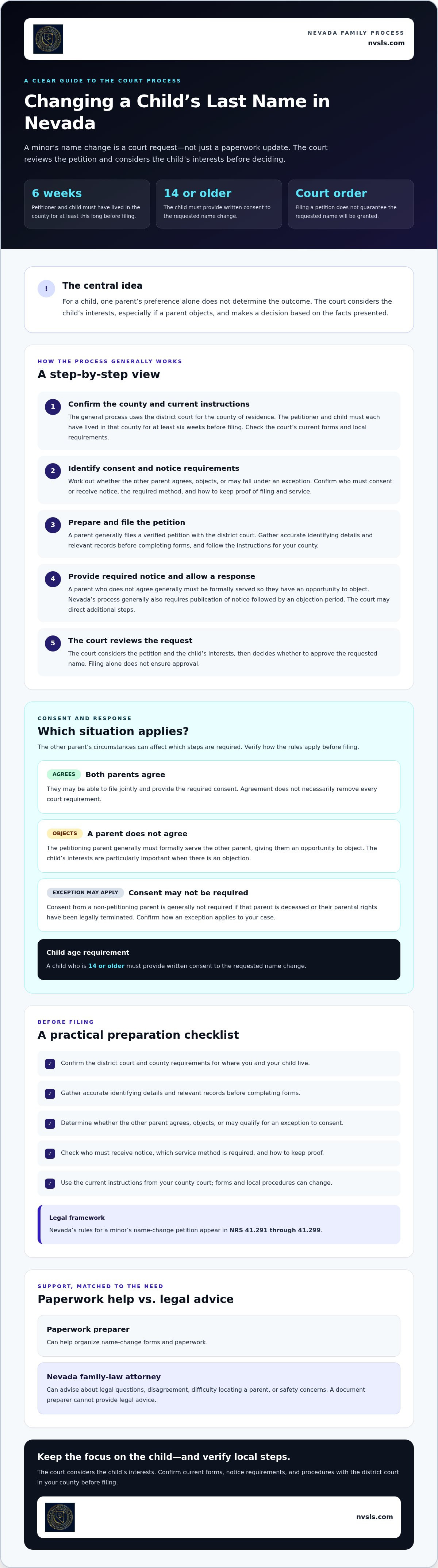
The general Nevada process directs a parent to file a verified petition in the district court for the county of residence. Current requirements state that both the petitioner and child must have lived in that county for at least six weeks before filing. Confirm that the county is the proper venue for your family’s circumstances, and check the court’s current forms and filing instructions.
For a family in Las Vegas, Clark County is a local example: the request is handled through the Clark County District Court. Families in Henderson and North Las Vegas should also check the current Clark County District Court instructions. Procedures can change, so use the court’s current guidance rather than an old checklist or another county’s forms. If you’re researching changing child's last name Nevada, confirming the right court is a useful first step.
Nevada Child Name-Change Requirements: Consent, Notice, and the Child’s Interests
Consent and notice can affect the steps in a child name-change case. They give affected people an opportunity to participate before the court decides. Nevada’s rules for a minor’s petition appear in NRS 41.291 through 41.299. The Nevada Self-Help Center explains Nevada's legal requirements for a child's name change, including consent requirements. Check the current instructions for the court handling your case, because the details can depend on your circumstances.
Notice gives affected people an opportunity to respond, and a complete record helps the court understand the request. Before filing, confirm who must consent or receive notice, which method the court requires, and how to keep proof of filing and service. Don’t assume that agreement between adults removes every court requirement.
Does the other parent have to agree to the name change?
If both parents agree, they may be able to file jointly and provide the required consent. If a parent does not agree, the petitioning parent generally must formally serve that parent so they have an opportunity to object. Nevada’s process also generally requires publication of notice, followed by an objection period. The court may direct additional steps. Consent from a non-petitioning parent is generally not required if that parent is deceased or their parental rights have been legally terminated. Verify how these rules apply before filing.
A child who is 14 or older must provide written consent to the requested name change. If you’re unsure whether a parent must be served, how to complete service, or whether an exception applies, get guidance before proceeding. Disagreement, difficulty locating a parent, or safety concerns can raise case-specific legal questions. A licensed Nevada family-law attorney can advise you about those issues. A document preparer cannot provide legal advice.
How might the court consider the child’s interests?
The child’s interests are central, particularly if a parent objects. The court decides based on the facts presented, not simply on which parent filed or what one parent prefers. A child’s age and written consent requirement matter, but the child’s preference alone does not guarantee approval. The judge assesses the request under the law and circumstances of the individual case.
Be factual and consistent. Explain the reason for the requested change and provide documents that support the information in the petition. A family change, a parent’s objection, or the child’s wishes do not automatically determine the outcome. If you need help organizing child name-change paperwork, Nevada State Forms & Filing Services provides paperwork preparation and administrative filing support in Las Vegas, Henderson, and North Las Vegas. This help is separate from legal advice or representation.
Which Situation Applies? Comparing Common Reasons for a Child’s Name Change
The reason for a request can affect what information and procedural questions you need to address. A parent seeking a child’s surname change after remarriage, for example, may need to consider different facts from parents who both agree or a family correcting a spelling error on a record. The Nevada Revised Statutes provide the legal framework. Confirm current forms and instructions with the court or agency handling your specific issue.
Use this comparison to identify what to check, not to predict an outcome:
| Situation | Questions to resolve | Details to verify |
|---|---|---|
| Both parents support the change | Do both parents need to sign the petition or consent forms? Must either parent appear or receive notice? | Current county forms, signatures, filing steps, and any remaining notice or publication requirements. |
| One parent objects or cannot be located | How must the other parent be notified? Is there a response or objection, and what happens next? | Service requirements, proof of service, deadlines, and court-specific instructions. Don’t omit information or guess about the parent’s whereabouts. |
| A family change prompts the request | What reason will you explain to the court, and what facts support the request? | Required petition information and supporting records. Divorce or a parent’s remarriage does not automatically change a child’s surname or decide a separate name-change request. |
| The existing record may contain an error | Is the name legally changing, or does the record need a correction? | Whether to contact the court or the agency that issued or maintains the record, and what evidence and forms that office requires. |
When both parents support the request
Agreement can reduce conflict about the request, but it does not remove court requirements or guarantee approval. Before filing, confirm whether both parents must sign, provide separate written consent, appear, or receive formal notice. Check that the requested name is written consistently across the petition and supporting documents.
When a parent objects or cannot be located
Disagreement or difficulty providing notice can change the process and requires careful attention to service rules. Don’t try to bypass notice or say that a parent cannot be found unless that is accurate. If facts are disputed, the parent’s location is uncertain, or safety concerns affect notice, consult a licensed Nevada family-law attorney about legal options before proceeding.
For a broader overview of the general process, see this Nevada name-change process guide. It addresses name changes generally; a child’s petition has its own rules. If you’re researching changing child's last name Nevada, identify the situation first so you can check the relevant requirements rather than rely on a one-size-fits-all checklist.
How to Prepare for a Nevada Child Name-Change Filing
Start with accurate information and the current instructions from the court in the appropriate county. Forms and steps can vary, so use this sequence as a checklist to verify, not as a substitute for your court’s requirements.
- Confirm where to file. Check the district court for the county where you and the child live. Current Nevada guidance generally requires both to have lived in that county for at least six weeks before filing. Verify venue and local filing rules directly with the court.
- Get the current forms. The paperwork may include a Verified Petition for Change of Name of Minor, a Notice of Petition, and consent forms, as applicable. Download the latest versions from the relevant Nevada court or county self-help center, and follow its instructions.
- Collect identifying details and records. Gather the child’s current legal name, requested name, date of birth, residence information, and each parent’s details. The court may require supporting records, such as a birth certificate or written consent. Confirm which documents are needed and whether copies or certified records are required.
- Check details for consistency. Compare names, dates, addresses, and the requested spelling across the petition and supporting documents. If the child is 14 or older, verify how to include the child’s written consent. Use accurate information throughout.
- Map the next steps. Before filing, confirm how to submit the case and whether your circumstances require service on a parent, publication of notice, or a hearing. Check current deadlines and instructions for any objection period.
What happens after paperwork is prepared?
After filing, follow the court’s directions for fees, service, and notice. Nevada’s general publication rule calls for notice at least once, followed by a 10-day objection period. Verify how the rule applies to your case and whether an exception or additional step is relevant. A hearing may be scheduled if someone objects or the judge has questions, so don’t assume every case follows the same path.
Keep copies of everything submitted, along with filing confirmations and any proof of service or publication. Track court notices and respond by the stated deadlines. Timing and additional steps depend on the court and the case, so avoid relying on a fixed timeline.
If your question comes up during a divorce, remember that a divorce filing and a child’s name-change request are distinct matters. For divorce paperwork context, see Nevada divorce filing documents. If you’re changing child's last name Nevada and want administrative help organizing the forms, get help preparing name-change paperwork. Document preparation is not legal advice or representation.
Getting Help With Nevada Child Name-Change Paperwork
Preparing a child’s name-change paperwork means keeping forms, identifying details, and supporting records accurate and organized. You can prepare the paperwork yourself using the court’s current instructions or seek document-preparation help. Be clear about what that help covers and when a question calls for legal advice instead.
What a document-preparation service can help with
Nevada State Forms & Filing Services prepares name-change paperwork and provides administrative filing support. This can help you organize information and prepare forms for your review. The service does not decide which legal approach is right for your family, interpret a judge’s instructions, or tell you how a disputed issue may be resolved.
Nevada State Forms & Filing Services does not provide legal advice or represent clients. Its local service area includes Las Vegas, Henderson, and North Las Vegas. Check the court’s current requirements yourself, including the correct forms, notice steps, and any hearing instructions. Paperwork assistance does not guarantee that a court will approve a request.
When should a parent speak with a family-law attorney?
Consider speaking with a licensed Nevada family-law attorney if the other parent contests the request, custody circumstances are complex, or you’re uncertain about who must receive notice or how notice should be handled. Safety concerns, disputed facts, and questions about a parent who cannot be located may also raise legal issues a document preparer cannot answer. An attorney can advise you about your specific circumstances. This section is general information, not an assessment of your case.
If you’ve reviewed your needs and want help preparing forms, you can contact Nevada State Forms & Filing Services to ask about name-change paperwork and administrative filing support. If you’re changing child's last name Nevada, keep the roles clear: a preparer can assist with paperwork, while legal questions belong with a licensed attorney.
Before filing, use this short checklist:
- Confirm court requirements: Check current forms, filing instructions, and any local procedures.
- Organize the facts: Review names, dates, addresses, and supporting records for accuracy and consistency.
- Address notice: Verify who must receive notice and what steps apply to your situation.
- Retain copies: Keep submitted forms, filing confirmations, and relevant notices together for reference.
Take the Next Step With Confidence
Changing a child’s surname is a court process, not an automatic update. The steps depend on your family’s circumstances, including parental consent, notice, and any response to the request. Before filing, confirm current requirements with the court and check that the petition and supporting records are complete and consistent.
If you’re researching changing child's last name Nevada, keep the roles clear: a document-preparation service can help organize and prepare paperwork, but it can’t provide legal advice or predict whether a judge will approve the request. If parents disagree, notice is uncertain, or custody circumstances raise legal questions, consider speaking with a licensed Nevada family-law attorney.
Nevada State Forms & Filing Services prepares name-change paperwork for people in Las Vegas, Henderson, and North Las Vegas. If you’d like help with the forms, get help preparing Nevada name-change paperwork. Contact the company to ask about paperwork preparation and administrative filing support, and follow the court’s current instructions for your case.
Frequently Asked Questions
Can one parent change a child’s last name in Nevada without the other parent’s consent?
Sometimes, but filing alone doesn’t change the child’s name, and the other parent may still need notice. If that parent doesn’t agree, Nevada’s process generally requires formal service and an opportunity to object. Consent is generally not required from a parent who has died or whose parental rights have been legally terminated. Because the facts and court requirements matter, confirm the current rules for your county before filing.
Does a child have to agree to a last-name change in Nevada?
A child who is 14 or older must provide written consent to the requested name change under Nevada’s minor name-change requirements. For a younger child, that specific written-consent rule doesn’t apply, but the court still considers the child’s interests when deciding the petition. A child’s preference by itself doesn’t guarantee approval. Check the current court forms for how consent must be documented and submitted.
How do I file to change my child’s last name in Nevada?
Generally, a parent files a Verified Petition for Change of Name of Minor with the district court in the county where the parent and child have lived for at least six weeks. Check the court’s current forms and instructions, then verify filing, service, publication, and hearing requirements for your case. In Las Vegas, start with Clark County District Court guidance. Keep copies of the petition and every document you submit.
What happens if the other parent objects to a child’s name change?
If the other parent objects, the court decides whether to grant the request based on the child’s interests and the facts presented. The court may schedule a hearing, so follow all notices and deadlines and keep relevant records organized. An objection doesn’t automatically decide the outcome either way. If parents disagree, consider asking a licensed Nevada family-law attorney for advice about your specific circumstances.
Can I change my child’s last name after a divorce in Nevada?
Yes, a parent may request a child’s name change after divorce, but the divorce itself doesn’t automatically change the child’s surname or settle a separate name-change request. The parent must follow the applicable court process, including requirements for consent, notice, and the child’s interests. If you’re considering changing child's last name Nevada after a divorce, check the current instructions for the county where you and your child reside.
How long does a child name-change case take in Nevada?
A Nevada child name-change case typically takes around 10 weeks, but that’s an estimate, not a guaranteed timeline. Court schedules, complete paperwork, notice or publication steps, and any objection can affect how long the case takes. Check with the district court handling your petition for current procedures and timing. Respond promptly to court instructions and keep copies of filings, notices, and any hearing information.
Do I need a lawyer to change my child’s last name in Nevada?
You don’t necessarily need a lawyer to prepare and file a petition, but document preparation is not legal advice. Consider speaking with a licensed Nevada family-law attorney if the other parent objects, custody circumstances are complex, or you’re uncertain about notice or service requirements. Nevada State Forms & Filing Services prepares name-change paperwork in Las Vegas, Henderson, and North Las Vegas, but doesn’t provide legal advice or representation.


