

What if the biggest risk in a for-sale-by-owner sale isn’t finding a buyer, but leaving an important term out of the paperwork? A for sale by owner contract Nevada sellers use should reflect the deal they actually negotiated, not simply fill in blanks on a generic template.
It’s reasonable to want a clear agreement without getting lost in legal language. The contract should set out key terms such as the purchase price, financing, inspection contingencies, and closing details. It also works alongside other sale documents. Nevada sellers must provide the Seller’s Real Property Disclosure Form, and the signed contract is not the deed that transfers ownership.
This guide explains what to gather before signing, which sections a Nevada FSBO agreement should address, and how disclosures, signing, and deed paperwork fit into the sale. You’ll also learn how professional document preparation can help bring the paperwork together. Nevada State Forms & Filing Services prepares contracts and deeds tailored to Nevada requirements, providing document-preparation support rather than legal advice or representation.
Key Takeaways
- A for sale by owner contract Nevada sellers prepare should record the terms both parties have agreed to, rather than serve as a property listing or marketing plan.
- Gather the parties’ legal names, property details, proposed dates, and negotiated terms before filling out the agreement.
- Understand how the contract, disclosures, deed, and signing or filing documents serve different roles in the sale.
- Before signing, organize attachments, read the complete paperwork, and resolve unclear language.
- Professional document preparation can help organize information and draft paperwork, but it does not include legal advice or representation.
What a for-sale-by-owner contract in Nevada does, and does not, cover
A for-sale-by-owner contract records the terms a buyer and seller have negotiated for a property sale. It identifies the parties and the property, then sets out the agreed transaction terms. A real estate contract can contain different provisions depending on the deal. A general overview cannot determine which terms or requirements apply to a specific Nevada transaction, so verify state-specific details before relying on a form.
How the sale contract fits into a Nevada home sale
The contract has a different purpose from a listing or advertisement. A listing presents the property to potential buyers; a sale contract records the terms after a buyer and seller reach an agreement. It also isn’t the deed. The deed and other closing paperwork are separate documents used in the later stages of a transfer. Signing the contract alone doesn’t ensure that a transfer is valid or complete.
Disclosures and signing or filing documents may also be separate from the agreement. Their roles and requirements can depend on the transaction and current Nevada rules. Treat the paperwork as connected, but not interchangeable: a term in the agreement doesn’t automatically replace a disclosure or deed document.
When a template may not answer the seller’s questions
A generic template may not match your negotiated contingencies, property details, or other terms. Blank fields and preselected options are easy to miss, especially when they refer to an attachment or another document.
Before using a form, review every blank, selection, attachment, and referenced document. Confirm that the property and parties are identified accurately and that the wording reflects what both sides agreed to. Don’t guess at language you don’t understand. Questions about legal rights, obligations, or a dispute belong with a Nevada attorney.
For a for sale by owner contract Nevada sellers are preparing, document preparation can help organize the agreed information and draft contract or deed paperwork. This support is administrative, not legal representation or legal advice. A document preparer can help put information into the paperwork, but can’t advise you on which legal terms to choose or how a dispute should be resolved.
What to include in a Nevada FSBO contract checklist
A useful checklist does more than collect names and numbers. It helps you see what the parties have agreed to, what still needs clarification, and who is responsible for each next step. Use this list to organize the transaction details and identify unanswered questions before drafting a for sale by owner contract Nevada buyers and sellers will review.
Property, parties, and negotiated sale terms
Start with the buyer’s and seller’s full legal names and clear identification of the property. Compare these details with relevant records and other transaction documents so names, address, and identifying information are consistent. Then record the agreed price, proposed dates, and how the parties intend to handle any deposit, including when it is due and who is responsible for delivering it.
Be specific about what stays with the property and what the seller will remove. If appliances, fixtures, or other personal items are included or excluded, list them instead of relying on assumptions. For a broader overview of the owner-managed process, see this guide on how to sell a house by owner in Nevada.
Contingencies, possession, and related paperwork
A contingency is a condition or event the parties address in the agreement, such as financing or an inspection. Write down what the parties have negotiated, including any related deadlines and next steps. Use this as a list of topics to clarify, not as a claim that a particular provision is required or suitable for every sale.
Also settle when possession is expected and how that timing relates to the agreed closing schedule. Keep contract terms distinct from seller disclosures, deed preparation, and signing or filing paperwork. Nevada-specific disclosure, notice, and execution requirements can depend on current rules and the transaction, so verify them through official guidance rather than assuming a template is current.
Use a simple tracker to keep the details together:
- Item: price, deposit, financing, included items, contingency, possession, or proposed date.
- Agreed detail: the specific term both parties have settled.
- Responsible party and timing: who handles the next step and by when.
- Related document: any attachment, disclosure, or closing paper the term refers to.
Review every entry against the actual agreement. If wording is unclear or a legal question remains, pause before signing and seek advice from a Nevada attorney. For help organizing contract information into Nevada-focused contract and deed paperwork, Nevada contract and deed preparation provides practical document-preparation support.
How to avoid gaps between the contract, disclosures, and deed
Sale paperwork works as a set, but each document has a different job. A for sale by owner contract Nevada sellers prepare should align with related documents without treating them as interchangeable. Use this comparison to keep their roles straight:
| Document | General role | What to cross-check |
|---|---|---|
| Sale contract | Records the parties’ negotiated sale terms. | Names, property identification, price, dates, and agreed terms. |
| Seller disclosures | Communicate property information through separate disclosure paperwork. | Property details and consistency with the transaction documents. |
| Deed | Serves as a property-transfer document. | Names and property description, prepared for the transaction. |
| Signing or filing documents | Support execution and administrative steps in the transaction. | Required signatures, dates, attachments, and applicable filing details. |
Contract versus deed: different documents, different tasks
The sale contract records the agreement between buyer and seller. The deed is a separate document used in the property-transfer process. Don’t treat a signed contract as a substitute for preparing transfer paperwork. Execution and recording details can depend on current Nevada and county procedures, so verify the applicable requirements before signing or filing.
Disclosure paperwork has its own purpose. Nevada’s Seller’s Real Property Disclosure Form is available from the state’s official disclosure form. Keep it with the transaction records, but don’t assume the sale contract replaces it or answers disclosure questions.
Keeping names, dates, and property details consistent
Compare each document side by side. Check the spelling of buyer and seller names, the property address and identifiers, and any dates or terms repeated across forms. A mismatch can prompt follow-up questions or slow administrative steps. If the parties later agree to change a date or term, document the change through an appropriate written process rather than relying on informal notes. Ask a Nevada attorney about legal rights, disputed terms, or how a change should be made.
Because deed details and transfer paperwork need careful coordination, this overview of professional deed drafting in Las Vegas explains the separate role of deed preparation. Consistent paperwork helps everyone track what was agreed and what remains to be completed.
How to prepare and review your Nevada FSBO paperwork before signing
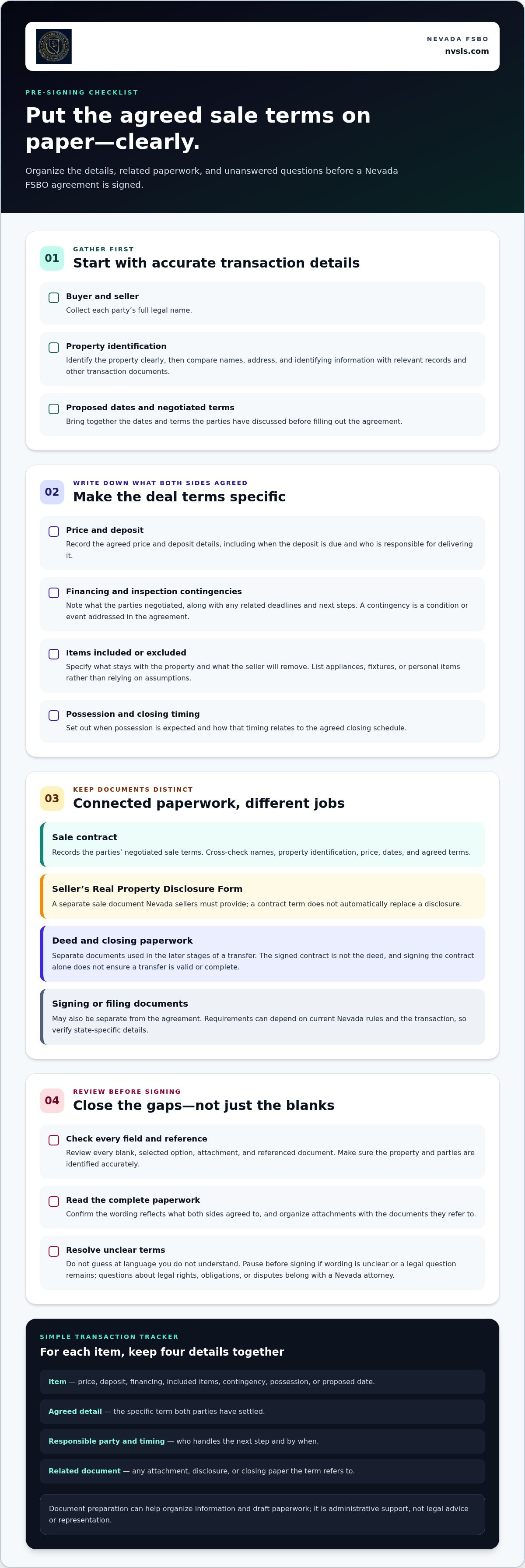
A steady review process helps catch missing details before they become last-minute questions. Use this sequence to organize the paperwork. It supports a careful review, but it doesn’t replace legal review or confirm that a document meets every requirement for your transaction.
A practical document-preparation sequence
- 1. Gather accurate facts. Collect the parties’ legal names, property identification, contact details, and relevant transaction records. Check spellings and property details before adding them to a for sale by owner contract Nevada buyers and sellers will review.
- 2. Settle the terms. Write down what the parties have agreed about price, deposit, financing, proposed dates, included items, contingencies, and possession. Note open questions instead of guessing at an answer.
- 3. Organize attachments. Gather referenced disclosures and other attachments. Label them clearly, then check that the contract points to the documents the parties intend to include. Verify current Nevada disclosure requirements through official guidance.
- 4. Review the complete set. Compare names, property details, dates, and terms across the contract and related paperwork. Both parties should read every page, selection, attachment, and referenced document. Resolve unclear wording before signing, and don’t leave blanks that could change how a term is understood.
- 5. Arrange signing. Confirm which documents need signatures, notarization, or filing, and verify current requirements for the specific documents and transaction. A checklist can help track completion, but it can’t determine legal rights or replace advice from a Nevada attorney.
Signing, notarization, and filing questions to verify
Notarization and recording rules can vary by document and transaction. Don’t assume every sale document needs notarization or that signing the contract completes the transfer. Check current official guidance for applicable execution and filing steps, including county recorder procedures where relevant.
If a document calls for notarization, mobile notary service can be a practical option for an on-site signing. Learn more about mobile notary signing services in Las Vegas. For questions about legal effect, rights, or disputed terms, consult a Nevada attorney. Document preparation can organize information and draft paperwork, but it isn’t legal representation or legal advice.
For practical help organizing your sale terms into Nevada-focused paperwork, explore Nevada contract document-preparation support.
Get Nevada FSBO contract documents prepared with clear, practical support
Turning agreed sale terms into organized paperwork can feel like a project of its own. Professional document preparation can help put the information you provide into clear contract and deed documents, with related paperwork organized so the pieces are easier to review together. For a for sale by owner contract Nevada sellers are preparing, this support can keep the drafting process focused and orderly.
What document-preparation support can help organize
Document preparation starts with the transaction information and terms the parties provide. This may include names, property details, agreed terms, dates, and documents that need to accompany the contract. The goal is readable, well-organized paperwork that reflects the information supplied, not a promise of legal sufficiency or a particular sale outcome.
The service is administrative. It doesn’t decide which terms you should negotiate, interpret your legal rights, or provide legal representation or legal advice. Both parties should review the completed documents carefully and direct legal questions to a Nevada attorney before signing.
When a Nevada attorney may be the right resource
Consider attorney guidance if you need legal interpretation, are negotiating terms that affect legal rights, or are dealing with a dispute. Document drafting and notarization serve different purposes from legal advice. A mobile notary can perform notarization when appropriate, but notarization does not review contract terms or resolve legal questions. Nevada State Forms & Filing Services offers mobile notary services in Las Vegas, Henderson, and North Las Vegas. Learn about mobile notary signing services in Las Vegas.
If you’re in the Las Vegas area and want practical help organizing your sale paperwork, explore Nevada document-preparation services. Contract and deed drafting support can help turn transaction details into organized documents, while legal advice and representation remain separate services provided by an attorney.
Move Forward With Clear, Coordinated Sale Paperwork
A well-prepared for sale by owner contract Nevada sellers use should reflect the terms both parties agreed to, while leaving room for the separate disclosures, deed, and signing documents involved in the transaction. Gather the details first, organize attachments, and have both parties read the complete paperwork and resolve unclear wording before signing.
Professional document preparation can help organize transaction information and draft contract and deed paperwork. Mobile notary services are also available in Las Vegas, Henderson, and North Las Vegas when notarization is appropriate. These are practical administrative services, not legal representation or legal advice. For questions about legal rights, contract interpretation, or a dispute, consult a Nevada attorney.
If you’re ready to organize your sale documents, explore Nevada contract and document-preparation services. With clear terms and a careful review, you can take the next steps with greater confidence.
Frequently Asked Questions
What is a for-sale-by-owner contract in Nevada?
A for-sale-by-owner contract in Nevada is a written agreement that records the terms a property seller and buyer negotiate directly. It commonly identifies the parties and property and describes the price, timing, and other agreed transaction details. Its contents and legal effect depend on current law and the facts of the sale. This overview is general information, not legal advice about a specific transaction.
Can I write my own FSBO contract in Nevada?
You can prepare your own paperwork, but a generic form may not reflect your property, negotiated terms, or current Nevada requirements. Review every provision, blank, selection, and attachment, and verify state-specific rules using authoritative sources. A document-preparation service can help organize information and draft paperwork. For legal interpretation, advice about your rights, or help with a dispute, speak with a Nevada attorney.
What should a Nevada for-sale-by-owner contract include?
A Nevada FSBO agreement can record the parties’ negotiated terms, including property identification, price, proposed dates, deposit arrangements, included items, possession, and any agreed contingencies. A for sale by owner contract Nevada sellers prepare should make the parties’ agreement clear, but this is not a complete legal checklist. Disclosure duties, required language, and signing rules can depend on current law and transaction details, so verify requirements before relying on a form.
Is a Nevada FSBO contract the same as a deed?
No. A sale contract records terms agreed by the buyer and seller; a deed is a separate property-transfer document. Signing the contract shouldn’t be assumed to complete the transfer or replace deed preparation, disclosures, or an applicable recording process. The documents and steps needed depend on the transaction and current procedures. Keep the agreement and transfer paperwork coordinated, and verify Nevada and county-specific requirements before signing or filing.
Does a Nevada FSBO contract need to be notarized?
Notarization requirements depend on the document and transaction, so don’t assume the sale contract itself always needs notarization. A deed or another transaction document may have separate signing or acknowledgment requirements. Verify current Nevada rules and relevant county procedures before signing or filing. A notary can verify a signing act when notarization is appropriate, but doesn’t review the agreement’s legal terms or provide legal advice.
Can a document preparer give me legal advice about my FSBO contract?
No. Document preparation and legal advice are different services. A document preparer can help organize information and draft paperwork within the service’s scope, but doesn’t interpret your legal rights or represent you. Ask a Nevada attorney about contract meaning, legal risks, negotiation strategy, or disputes. In Las Vegas, Henderson, and North Las Vegas, Nevada State Forms & Filing Services provides document preparation and mobile notary services, not legal advice or representation.
What happens after the buyer and seller sign a Nevada FSBO contract?
Next steps depend on the written terms and the transaction. The parties may need to complete agreed contingencies, coordinate disclosures, prepare transfer documents, and follow applicable signing or recording procedures. Keep deadlines and responsibilities organized, and verify current Nevada and county-specific requirements. Signing doesn’t necessarily finish every part of the sale. If a dispute arises or you need a legal interpretation, consult a Nevada attorney rather than relying on general information.


