

What if the biggest risk in an agreed divorce isn’t a disagreement, but a missing form or signature? Preparing uncontested divorce paperwork Las Vegas couples may need can feel confusing, even when both spouses want a straightforward process. The right filing route depends on the circumstances, and a joint petition isn’t automatically the right fit for every couple.
A clear checklist helps you catch gaps before filing. This guide explains the paperwork a joint divorce may involve in Clark County, including core documents and how having children can affect the forms. You’ll learn how to organize a complete packet and follow current court instructions, while keeping general information separate from advice about your specific situation.
The main checkpoints are confirming the filing path, organizing and signing documents, and following the filing steps. Professional document preparation and administrative filing support can help with the paperwork. These services do not provide legal advice or representation, and they don’t decide divorce terms.
Key Takeaways
- Uncontested divorce paperwork Las Vegas couples file depends on their circumstances, including whether they have minor children.
- Mutual agreement can simplify the process, but incomplete details or inconsistent answers may still cause filing problems.
- A step-by-step review can help you organize the paperwork and follow current Clark County filing instructions.
- Document preparation can put client-provided information into an organized packet, but it does not provide legal advice or decide divorce terms.
What counts as uncontested divorce paperwork in Las Vegas?
In an uncontested divorce, both spouses agree on the terms they need to resolve and can submit a joint filing. Agreement is only the starting point. The court still needs the required documents, completed consistently and submitted according to current instructions. Understanding the difference between a shared filing and an individual case can help you identify the preparation path that fits your situation.
A joint petition is a filing the spouses make together. It differs from a complaint filed by one spouse, which starts a different process with its own forms and steps. These routes aren’t interchangeable just because both can lead to a divorce. If you’re learning the basics, the general Divorce overview may provide context, but it won’t determine which Nevada court forms apply to your circumstances.
Document preparation means organizing and completing forms using information you provide; legal advice means applying the law to your circumstances and recommending what you should do. Preparation can make a packet clearer and more consistent. It doesn’t decide your divorce terms or replace legal advice or representation.
When can spouses use a joint petition in Clark County?
A joint petition is for spouses who can both participate in filing together. Each spouse needs to be willing and able to provide information, review the documents, and complete the steps required of them. Before assembling forms, confirm that this route fits your situation under current Nevada law and Clark County Family Court instructions. The court’s current forms and guidance are the practical reference for filing requirements.
Agreement matters, too. If you still disagree about a required term, such as how to address property, debts, or arrangements for children, the joint route may not fit as things stand. Choosing a joint-petition packet won’t resolve an open issue. The paperwork should reflect an actual shared position, rather than leave important decisions unanswered or hide a disagreement.
What does “uncontested” mean for the paperwork?
For the forms, “uncontested” means the spouses’ answers and requested terms align. If one document describes an arrangement one way and another gives a conflicting answer, the packet may be unclear even if both people generally agree. Compare names, dates, case details, and terms across the forms before signing. Small inconsistencies can create avoidable questions.
Agreement doesn’t mean automatic approval. The court reviews submitted documents under applicable procedures, and the required packet can depend on details such as whether the spouses have minor children. Follow current court instructions, provide the requested information, and make sure both spouses have participated as required. If the review raises a question or the instructions don’t address your circumstances, the next step depends on the issue. This is general information, not a decision about which process is right for you.
Which uncontested divorce forms may Las Vegas spouses need?
Treat the paperwork as a packet with several purposes, not a universal checklist. The exact forms can change with your circumstances, especially if you have minor children, and court instructions may be updated. Use current Eighth Judicial District Court and Nevada court resources to identify the forms required for your filing route before completing anything. The Nevada Revised Statutes (NRS) Chapter 125 provides the state-law framework, while court forms show what information the court requests.
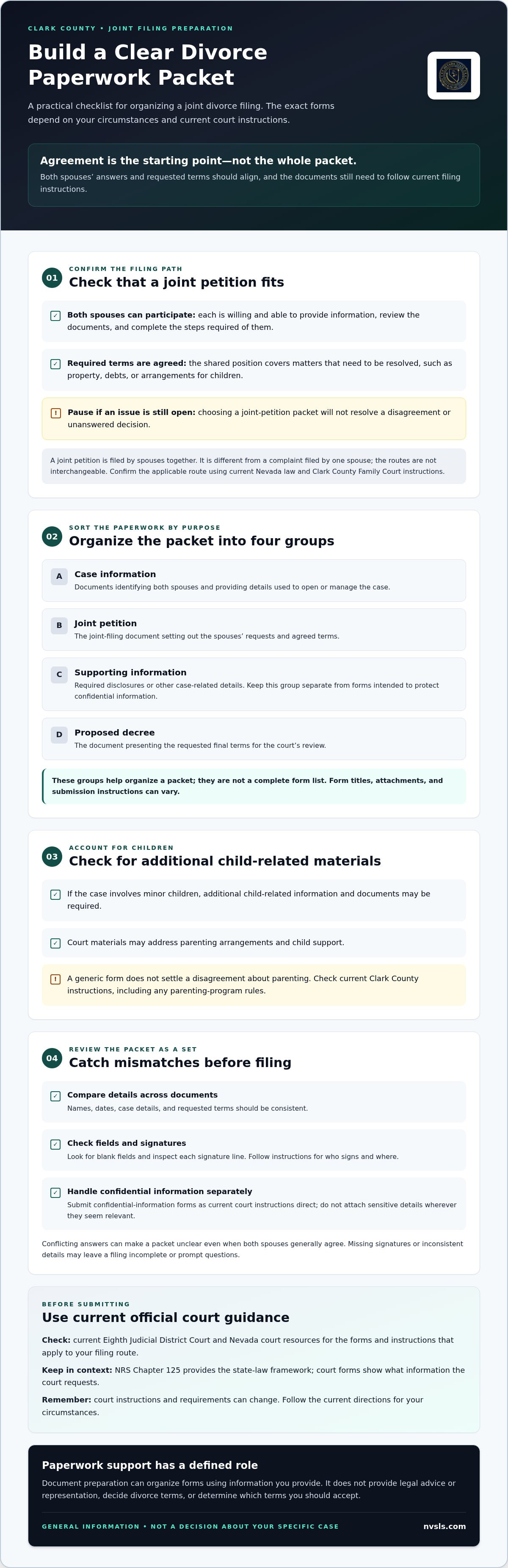
For uncontested divorce paperwork Las Vegas spouses may need, sort the packet by purpose:
- Case information: Forms identifying both spouses and providing details used to open or manage the case.
- Petition: The joint-filing document setting out the spouses’ requests and agreed terms.
- Supporting information: Required disclosures or other forms with details relevant to the case. Keep this category separate from forms intended to protect confidential information.
- Proposed decree: The document presenting the requested final terms for the court’s review.
This is a way to organize the paperwork, not a complete form list. Titles, required attachments, and submission instructions can vary. For a more detailed preparation overview, see the Nevada divorce filing documents guide, then compare its general guidance with current official forms. Nevada State Forms & Filing Services provides divorce document preparation to help organize forms using information you provide. The service does not provide legal advice or determine which terms you should accept.
How do forms differ when children are involved?
A case involving minor children can require additional child-related information and documents. The court may require materials addressing parenting arrangements and child support, but a generic form won’t resolve a disagreement about parenting. Clark County requirements, including any parenting-program rules, can change. Review current instructions for cases involving children before assembling or filing the packet.
What supporting documents and signatures should readers check?
Review the packet as a set. Spell names consistently, make sure case details match, and check that dates make sense across documents. Inspect each signature line and follow the instructions for who must sign and where. A blank field, mismatched name, or missing signature can leave a filing incomplete or prompt questions.
Confidential-information forms are a separate category. Handle and submit them as current court instructions direct, rather than attaching sensitive details wherever they seem relevant. Don’t assume notarization is required: check the instructions for each current form to see whether a signature must be notarized and what signing procedure applies. If an instruction is unclear, pause before signing or submitting the form. A careful final review helps keep the packet organized, but it doesn’t replace legal guidance about the terms themselves.
Does an agreement make uncontested divorce paperwork simple?
Agreement helps, but it doesn’t guarantee that forms are complete or that the court will accept a filing. The paperwork must accurately reflect what both spouses have decided. If one form says one spouse will pay a debt and another describes a different arrangement, the inconsistency can raise questions. Missing information or unanswered sections can also hold up the next step.
Before signing, compare answers across the packet and make sure each requested term is clear enough to put in writing. “We agree in general” may not settle the details a form asks about. A complete packet records decisions. It doesn’t make those decisions for you.
Document preparation can organize and draft forms from information you provide, but it cannot resolve a legal disagreement. It also doesn’t determine either spouse’s rights or recommend terms for property, support, or parenting. Those decisions belong to the spouses, with independent legal advice when needed.
Which issues should spouses settle before completing forms?
Before entering terms, identify the subjects you need to address together. Depending on your circumstances, these may include:
- How to handle property and debts.
- Whether either spouse will pay or receive support.
- Parenting arrangements and child-related matters, if you have children.
These are broad categories, not recommendations about what an agreement should say. For example, spouses may agree to divide property but have different understandings of which items or accounts that includes. Clarifying the actual terms before putting them in forms can reduce conflicting answers. If a question is unresolved or complex, independent legal advice can help you understand your options before committing to language in a filing.
When might the joint-paperwork route stop fitting?
A joint filing depends on both spouses being able to participate and present consistent information. If one spouse won’t cooperate, a disagreement develops, or the terms remain unclear, the paperwork may no longer reflect a shared position. Reassess the route rather than forcing an unresolved issue into a form. The appropriate next step depends on the circumstances and current court instructions.
Keep the roles clear. Document-preparation support can organize forms and enter information supplied by the clients. It cannot decide how to divide a disputed asset, interpret a spouse’s legal rights, recommend a parenting arrangement, or provide case-specific legal advice. If you’re unsure whether the joint process still fits, get independent legal guidance before signing or filing. Settle the terms first, then prepare the paperwork.
How to File Uncontested Divorce Papers in Las Vegas
A reliable filing process is a series of checks, not a race to submit forms. For uncontested divorce paperwork Las Vegas spouses prepare, keep the paperwork, review, and filing steps distinct. The Eighth Judicial District Court handles Clark County family cases, and the Clark County Family Courts and Services Center is a local point of reference. Use current court resources to confirm the procedure before submitting documents.
- Confirm the filing route. Make sure a joint filing fits your circumstances and both spouses can participate. If terms are unresolved or the filing situation has changed, pause and review the applicable court instructions before preparing a packet.
- Gather information first. Collect the details requested by the current forms, including identifying information and the details needed to describe the spouses’ agreements. Keeping records together makes it easier to enter the same information accurately across documents.
- Prepare the current forms. Use the forms and instructions for the correct filing path. Requirements may differ depending on whether the spouses have minor children. A Nevada divorce forms guide can explain document categories, but the court’s current instructions determine what to file.
- Review the complete packet. Check forms together for matching names, dates, case information, requested terms, attachments, and required signatures. Confirm that confidential information is handled as instructed.
- Follow current filing instructions. Verify the court’s submission method, any required copies, fees, and other filing directions before sending or delivering documents. Keep a copy of the submitted packet and any confirmation or receipt for your records.
What should you review before submitting the packet?
Start with the forms. Confirm they’re current and match the joint filing route. Compare names, dates, case details, and attachments across the packet, then check every signature requirement. Follow official directions for copies, confidential details, and submission. Don’t rely on an old checklist or assume every document should be submitted the same way.
Where do Las Vegas-area spouses find filing instructions?
Use current resources from the Clark County Family Law Self-Help Center and the Eighth Judicial District Court. Verify the Family Courts and Services Center address, public filing methods, fees, and any case-specific instructions through court resources before acting. Procedures can change, so avoid relying on outdated directions or a location remembered from an earlier filing.
For practical help organizing divorce forms and filing steps, explore divorce document preparation support from Nevada State Forms & Filing Services. The service provides administrative assistance, not legal advice or representation.
How can document preparation support a Las Vegas joint divorce filing?
Even when both spouses agree, gathering information and completing a court packet takes coordination. Professional document preparation provides practical support with the paperwork. Nevada State Forms & Filing Services prepares divorce and family-law documents using information supplied by clients and helps organize forms and filing steps.
That support has clear limits. A document preparer doesn’t provide legal advice or representation, decide what divorce terms are fair, or tell either spouse what to accept. Administrative filing support can assist with paperwork steps, but it can’t promise that a court will accept the documents or grant the requested divorce. The spouses remain responsible for reviewing their information and decisions.
What can a document preparer help with?
Document preparation focuses on turning client-provided information into organized paperwork. Support includes drafting applicable divorce and family-law forms, assembling the packet, and helping with administrative filing steps. The goal is a clear set of documents based on the information provided and applicable instructions.
For example, if the spouses have supplied consistent details but aren’t sure how to organize the forms, preparation support can put the documents in order and identify missing information to address. It doesn’t change the substance of the spouses’ agreement or speak for them before the court. Review current court instructions and check the completed packet carefully before submitting it.
What questions belong with an attorney?
Questions about legal rights, disputed terms, and case strategy call for advice from a qualified attorney. This includes questions about how a proposed agreement may affect property, debts, support, or parenting arrangements. A document preparer doesn’t assess which settlement terms you should accept or explain what a particular choice may mean for your legal position.
This distinction helps match the support to the question. Use paperwork assistance to organize and prepare documents from the information you provide. Seek legal counsel for case-specific guidance or decisions about your rights and agreement terms. If the spouses can’t agree, document preparation can’t resolve the conflict.
If organizing forms and filing steps would make the process more manageable, explore divorce document preparation support. Nevada State Forms & Filing Services helps with the paperwork while leaving legal decisions with the spouses, informed by qualified legal counsel when needed.
Take the Next Step with a Clear Plan
Start by gathering the information you and your spouse have agreed on. Then decide whether you want help turning it into an organized filing packet. A little structure can make the paperwork process more manageable. If questions arise about your rights or the terms themselves, pause and seek legal guidance before signing.
For uncontested divorce paperwork Las Vegas spouses can get professional document preparation and administrative filing support from Nevada State Forms & Filing Services, serving Las Vegas, Henderson, and North Las Vegas. The support focuses on forms and filing steps, not legal advice or representation. You remain in control of the decisions that shape your next chapter.
Explore divorce document preparation support and take the paperwork one clear step at a time.
Frequently Asked Questions
Is an uncontested divorce the same as a joint petition in Nevada?
No. “Uncontested” describes the spouses’ agreement, while a joint petition is a specific way to file together. Agreement alone doesn’t establish that joint-petition forms fit your case. For example, spouses may agree on major terms but still have a filing circumstance that affects the appropriate route. Review current Nevada forms and Clark County instructions. A document preparer can help with paperwork, but questions about eligibility call for legal advice.
Can we file uncontested divorce paperwork in Las Vegas if we have children?
Yes, a case involving children may still be uncontested, but it can require additional forms and child-related details. Current Clark County Family Law Self-Help Center instructions explain local requirements, including whether a parenting program applies. Before preparing uncontested divorce paperwork Las Vegas parents should review the forms for their case type. Questions about custody, support, or parenting terms are legal questions, not document-preparation decisions.
What happens if my spouse and I disagree after preparing joint divorce forms?
If a disagreement arises, the prepared documents may no longer reflect both spouses’ positions. Don’t submit a packet containing terms one spouse no longer accepts. Set aside the version you prepared, identify which issue changed, and review current court guidance before taking another filing step. An attorney can explain your rights and discuss the process that may apply. A document preparer can assist with forms, but can’t negotiate or resolve a dispute.
Do both spouses have to sign uncontested divorce paperwork in Nevada?
A joint filing generally requires both spouses to participate, but signature, verification, and notarization directions depend on the specific current forms. Check every signature block rather than assuming one rule applies to the whole packet. A form may have separate instructions for each spouse or require a particular signing step. If your spouse can’t or won’t participate, don’t sign for them; ask an attorney about options for your situation.
How much does it cost to file uncontested divorce paperwork in Las Vegas?
The court’s filing charge and a document-preparation service fee are separate expenses, and either amount may change. Check the current Clark County fee schedule for court charges. For document preparation fees, review the service information before deciding what support you need. If the filing fee is a concern, check the court’s current fee-waiver process and eligibility. Don’t assume preparation fees include court charges or other filing expenses.
Can I prepare and file uncontested divorce forms without a lawyer in Nevada?
Some people prepare their own paperwork using official Nevada and Clark County self-help resources. Before filing, make sure you understand each form’s instructions and can accurately enter the requested information. Keep a copy of the completed packet and any court confirmation for your records. Self-help materials explain procedures, but they don’t assess your legal rights or tell you which terms to accept. For disputed issues or case-specific guidance, consult a qualified attorney.
How long does an uncontested divorce take in Clark County?
There isn’t one timeline that applies to every case. The court’s review process, the completeness of the filing, and case-specific requirements can affect how long it takes. After submitting documents, watch for court notices and follow any instructions or deadlines they contain. Missing information or a change in the spouses’ agreement may require additional steps. Document preparation can help organize forms, but it can’t control court review or predict when an order will be issued.


